
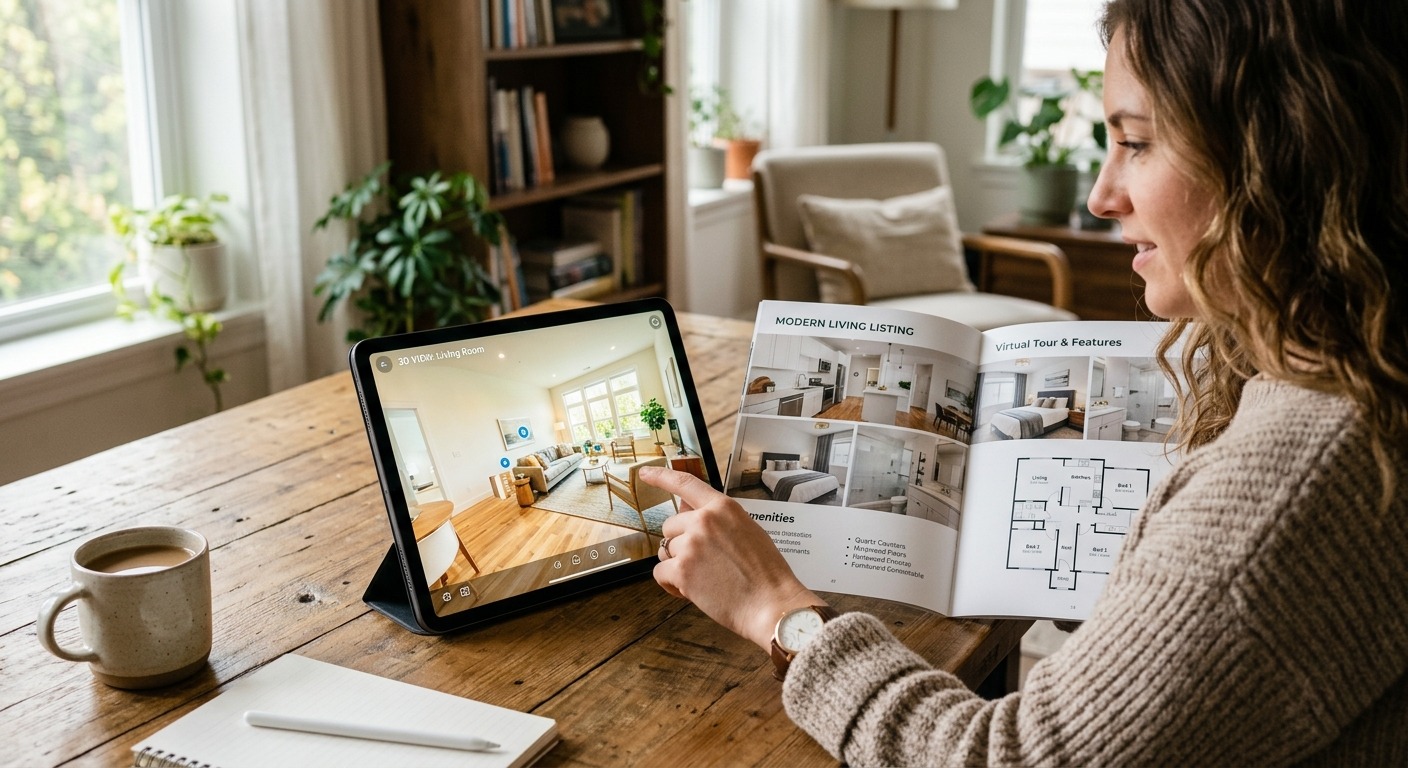
Your virtual tour is live. The 3D walkthrough looks stunning. But three days after launch, the view count has barely moved. The tour is not the problem. The ecosystem around it is. A virtual tour without supporting visual content is like a great film with no trailer. People who stumble onto it love it. Most buyers never get there at all.
The Visual Stack
A high-performing virtual tour campaign is built on layered visual assets that earn attention at every stage of the listing.
- Pre-listing imagery builds genuine interest before your photographer has even arrived
- Platform-specific visuals, from social graphics to email headers, pull buyers toward the tour link
- Post-launch content keeps the listing visible long after the first-weekend rush fades
Why a Virtual Tour Without Supporting Visuals Falls Short
A virtual tour is a destination. It needs traffic to matter. And in real estate marketing, traffic comes from the right visuals placed in the right channels at the right time.
Agents who invest in 3D walkthroughs but skip the surrounding content strategy are leaving the hardest-working part of their marketing budget sitting idle. The tour renders beautifully. It waits patiently. And buyers who would have loved the property scroll past something else entirely.
The agents closing faster are not necessarily the ones with the best tours. They are the ones who treat the tour as the centerpiece of a full visual campaign and build everything else around it.
Mapping Visual Content Across the Listing Timeline
The listing journey has three natural phases: pre-launch, active listing, and extended reach. Each phase calls for different visual assets. When you plan these in advance, the tour launch becomes an event your audience is already anticipating, not a quiet upload they stumble across by chance.
Visual Formats by Phase of the Listing Campaign
| Phase | Primary Goal | Visual Formats to Use |
|---|---|---|
| Pre-listing teaser | Build anticipation, grow your audience | Branded templates, lifestyle imagery, countdown graphics |
| Tour launch | Drive clicks to the virtual tour link | Tour stills, short video clips, email headers |
| Active listing | Sustain engagement, reach new buyers | Feature highlight cards, room-specific stills, story formats |
| Extended reach | Reach buyers who missed the launch window | Repurposed graphics, fresh angle cuts, testimonial cards |
Filling the Pre-Photography Gap With the Right Imagery
There is a window between signing the listing agreement and the day your photographer arrives. Most agents let that window pass. Smart agents treat it as a runway.
During this pre-photography phase, your branded marketing templates still need images. Leaving them blank or using rushed phone snapshots undermines your brand before the campaign has even started. That is where high-quality interior stock photos come in. They let you build polished email headers, Instagram posts, and landing page visuals that match the property’s style and price point, without waiting on your shoot date.
The key is choosing imagery that is consistent with the home’s actual aesthetic. A midcentury modern open-plan home should use warm, minimal interiors in your templates. A luxury penthouse calls for crisp, high-contrast photography with clean lines. When your pre-listing content looks cohesive with the tour content that follows, buyers trust your presentation from day one.
Building a Pre-Launch Teaser Campaign That Actually Works
The teaser phase is your opportunity to prime your audience before the listing ever touches the MLS. Think of it as the trailer before the film. Done right, you arrive at launch day with an audience that is already curious and ready to click.
Here is what a strong pre-launch visual sequence looks like in practice:
- Day one: Post a single striking image from the property or a well-matched lifestyle interior with minimal copy. Let the visual carry the moment.
- Day three: Share a short behind-the-scenes story from the staging process or shoot prep. This humanizes the listing and builds real connection.
- Day five: Drop a “coming soon” branded graphic that teases the virtual tour. Use a “tour goes live this weekend” call to action to create forward momentum.
- Launch day: Post your hero image with a direct link to the virtual tour. By now, your audience has been primed across three separate touchpoints.
The visuals do not all need to come from professional listing photography. Lifestyle imagery, on-brand stock interiors, and designed graphics all play a legitimate role in this sequence. Consistency of style matters more than the source of each individual image.
Social Visuals That Pull Buyers Into the Tour
Once the tour is live, the job of your social content is straightforward. Get buyers to the tour link. Every post is a doorway. The mistake most agents make is posting the link once and waiting for the results to come in.
Buyers who would love this home are scrolling at different times, on different days. One post does not reach all of them. According to home buyer research from the National Association of Realtors, the vast majority of buyers use the internet during their search process, which means repeated visual touchpoints are not optional. They are how listings get seen.
A few formats that consistently perform well for driving tour traffic:
- Room-specific stills pulled from the tour, rotated across days (kitchen on Monday, primary suite on Thursday)
- Short video clips, 15 to 30 seconds, that tease a specific area with a clear “see the full tour” call to action
- Quote graphics that surface a standout detail buyers might miss on the MLS (“12-foot ceilings, radiant heated floors, and a view you have to walk through to appreciate”)
Email Campaigns That Drive Consistent Tour Traffic
Email remains one of the highest-converting channels in real estate marketing. Agents who use it well do not blast one “new listing” email and call it done. They build a short sequence around the tour that keeps the property visible across multiple buyer touchpoints.
Here is a structure that works reliably for any price point:
- Launch email: Send the moment the listing goes live. Lead with a strong hero image built from your pre-launch visuals. Make the subject line about the property, not the tour. The tour link is the call to action inside the email body.
- Feature spotlight email: Send two or three days after launch. Highlight one specific room or feature with a tight image and a direct link back to the tour. The kitchen. The outdoor entertaining space. The primary closet that honestly deserves its own post.
- Social proof email: If the listing is attracting serious attention or has received offers, a brief “this one is moving fast” message with a visual keeps fence-sitters from losing their chance. Keep it short and image-forward.
- Final call email: As the listing approaches an offer deadline or open house, a last-chance message with the tour link front and center creates the urgency that nudges buyers to act.
Your email header images matter far more than most agents realize. A strong, on-brand header determines whether the email gets opened or archived. Well-chosen lifestyle interiors and branded graphics do serious work at this stage, especially when the next batch of professional stills has not arrived yet.
Keeping the Campaign Alive After the First Weekend
Most listings see their biggest traffic spike in the first 72 hours. After that, activity drops sharply unless you keep feeding the content engine. This is where campaigns stall. The tour is still live. The listing is still active. But the visual content that was driving traffic has gone quiet.
You do not need new photography to extend the run. Pull a fresh still from a part of the tour you have not highlighted yet and post it with new copy. Write a “did you catch this?” post that points to a detail buyers often miss when browsing the MLS. Take your email header graphics and repurpose them for paid social ads. Content you already have, reframed and re-angled, keeps the listing visible without additional production cost or scheduling headaches.
Where a Cohesive Visual Strategy Changes the Outcome for Sellers
When you map your visual assets to the full arc of a listing, something shifts. The virtual tour stops being a deliverable you hand off after photography day. It becomes the anchor of a campaign that earns attention from the first teaser post to the final offer deadline.
Agents who build this kind of cohesion see more than higher tour view counts. They see buyers who feel familiar with a property before they ever walk through the door. They see inbound inquiries from people who found the listing three weeks in through a repurposed social graphic. They see referrals from sellers who watched their home treated like a launch event, not just another upload to the MLS.
The tour does not change. The strategy around it does. And that strategy is where your listing marketing actually earns its keep.